Industry White Paper & Strategic Blueprint
Architecting High-Yield Toll Processing & Custom OEM Operations in Modern Contract Manufacturing
In today's highly fragmented global supply chain, multinational enterprise brands, chemical raw material innovators, and high-growth nutraceutical companies are fundamentally recalibrating their manufacturing strategies. The paradigm shift moves away from capital-intensive, in-house production facilities toward high-precision Custom OEM Toll Processing Facilities and Global Exporters. Modern toll manufacturing—wherein a brand owner provides raw material substrates or proprietary chemical formulations while the contract development and manufacturing organization (CDMO) executes specialized synthesis, extraction, blending, forming, or packaging—has evolved from a simple capacity buffer into a cornerstone of technological scalability.
Whether navigating complex rheology modifications in cosmetic formulations (such as liquid thickeners like Crothix), performing botanical extraction at strict 10:1 bio-concentration ratios, or processing sensitive active pharmaceutical ingredients (APIs) under cGMP cleanroom parameters, securing an enterprise-grade toll processing partner provides an irreplaceable strategic moat. This technical white paper examines the core engineering frameworks, regulatory compliance architecture, and market trends shaping global toll processing and contract manufacturing.
“Toll processing is no longer merely an outsourcing exercise for surplus volume. It is a strategic technological partnership that allows enterprise brands to leverage multi-million-dollar specialized infrastructure—from continuous-flow fluid bed granulators to ultra-high-pressure homogenization systems—without incurring fixed capital expenditure risks.”
1. Technical Spectrum of Advanced Toll Processing Capabilities
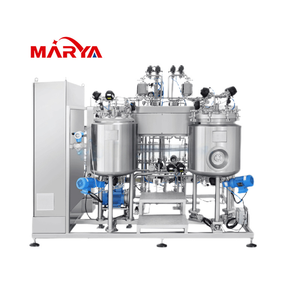
A true enterprise-grade toll processing facility operates cross-disciplinary process engineering platforms across chemical, cosmetic, dietary supplement, and food science domains. The primary engineering units include:
- Particle Size Reduction & Particle Engineering: Micronization, jet milling, pin milling, and cryogenic grinding to achieve exact particle distribution curves ($D_{50}$, $D_{90}$ metrics) for enhanced dissolution kinetics and uniform bioavailability.
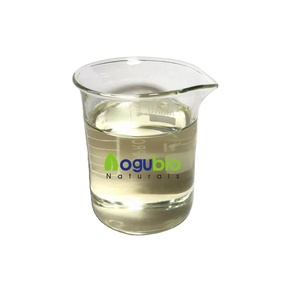
- Hydrocolloid & Rheology Processing: Specialized synthesis and aqueous/solvent blending for complex viscosity modifiers (such as polyoxyethylene ether derivatives, Crothix systems, and cellulose gels) ensuring crystal-clear aesthetics and high shear resistance.
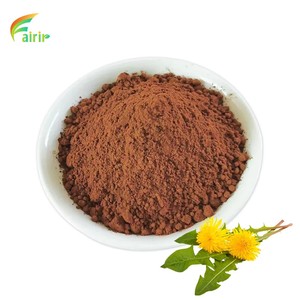
- Low-Temperature Vacuum Evaporative Extraction: Continuous counter-current extraction systems designed for heat-sensitive botanicals (e.g., Dandelion 10:1, Green Tea EGCG, Chlorophyll extract), preserving fragile phytochemical markers and polyphenolic profiles.
- Micro-Encapsulation & Liposomal Delivery: Spray drying, fluid-bed Wurster coating, and double-emulsification technology designed to protect hydrophobic lipid molecules (Omega-3 fatty acids, CoQ10, vitamins) against thermal degradation and premature oxidation.
- Advanced Solid Dosage & Hydrocolloid Confection Deposition: Automated high-speed tableting, bilayer compression, film coating, and continuous starchless pectin/gelatin gummy deposit systems with absolute dosage uniformity ($\pm 1.5\%$ variance).
Custom Formulation & R&D
In-house PhD-led analytical chemistry team offering custom reverse-engineering, excipient compatibility testing, and rapid prototype delivery within 14 business days.
21 CFR 111 & 117 Compliance
Fully audited manufacturing suites adhering to human food preventive controls and dietary supplement cGMP guidelines, certified under SQF Edition 9 and ISO 22000.
Triple-Continent Supply Footprint
Seamless execution across three regional centers: Springville, Utah (USA Headquarters); Netherlands (EU-GMP hub); and Shenzhen (Global sourcing & raw materials scale).
2. Analytical Comparison: Full Turnkey OEM vs. Pure Toll Processing
Sourcing directors must evaluate the operational trade-offs between turnkey OEM manufacturing and toll processing models. The table below delineates key structural variables:
| Operational Metric |
Toll Processing Model |
Turnkey OEM Contract Manufacturing |
| Raw Material Sourcing |
Client supplies primary active ingredients / substrates |
CDMO sources 100% of ingredients, active ingredients & excipients |
| IP & Recipe Protection |
Maximum protection; proprietary process steps isolated under NDA |
Shared IP or standardized CDMO off-the-shelf base formulas |
| Quality Control Burden |
Shared responsibility; client validates substrate purity before delivery |
CDMO owns 100% incoming raw material testing and release CoA |
| Working Capital Impact |
Lower processing fees; client retains raw material balance sheet asset |
Higher per-unit price; zero raw material holding overhead for client |
| Production Lead Time |
Accelerated (Typically 3–5 weeks post material arrival) |
Standard (8–12 weeks including raw material procurement) |
3. Future Procurement & Technological Trends in Toll Processing (2025–2030)
As the regulatory landscape tightens and global consumers demand clean-label transparency, several macro trends are reshaping how procurement officers negotiate contract manufacturing agreements:
A. Clean-Label & Synthetic Excipient Migration: Traditional chemical binders, synthetic silicon dioxides, and artificial colorants are being rapidly phased out. Enterprise toll processors are adopting ultrasonic micro-milling and natural plant hydrocolloids (such as low-methoxyl pectin, acacia gum, and tapioca starch systems) to achieve identical functional mechanical properties in tablets and gummies without compromising clean-label positioning.
B. Continuous Flow Synthesis & Enzymatic Catalysis: In chemical additive manufacturing and specialty ingredients (such as optical brighteners and ester-based thickeners), batch-tank manufacturing is giving way to continuous-flow micro-reactors. Continuous synthesis yields higher conversion ratios, eliminates batch-to-batch thermal variance, and reduces carbon footprints by up to $35\%$.
C. Nearshoring & Multi-Regional CDMO Dual-Sourcing: Geopolitical volatility and maritime shipping delays have forced brands to adopt a "Nearshore + Offshore Hybrid" manufacturing architecture. Operating a primary production base in Springville, Utah alongside secondary capabilities in Europe and Asia guarantees supply chain resilience, allowing brands to adjust regional production allocations within 14 days of unexpected market disruptions.
D. Automated Certificate of Analysis (CoA) Blockchain Traceability: Modern enterprise procurement requires instantaneous verification of heavy metals ($Pb, As, Cd, Hg$), pesticide screening, microbial limits, and HPLC potency assays. Advanced toll processing plants now digitize batch records and laboratory analytics into tamper-proof quality control portals, eliminating audit friction for retailers and international customs inspectors.
 Supplement