The Technical Science of Pectin Gummy Contract Manufacturing
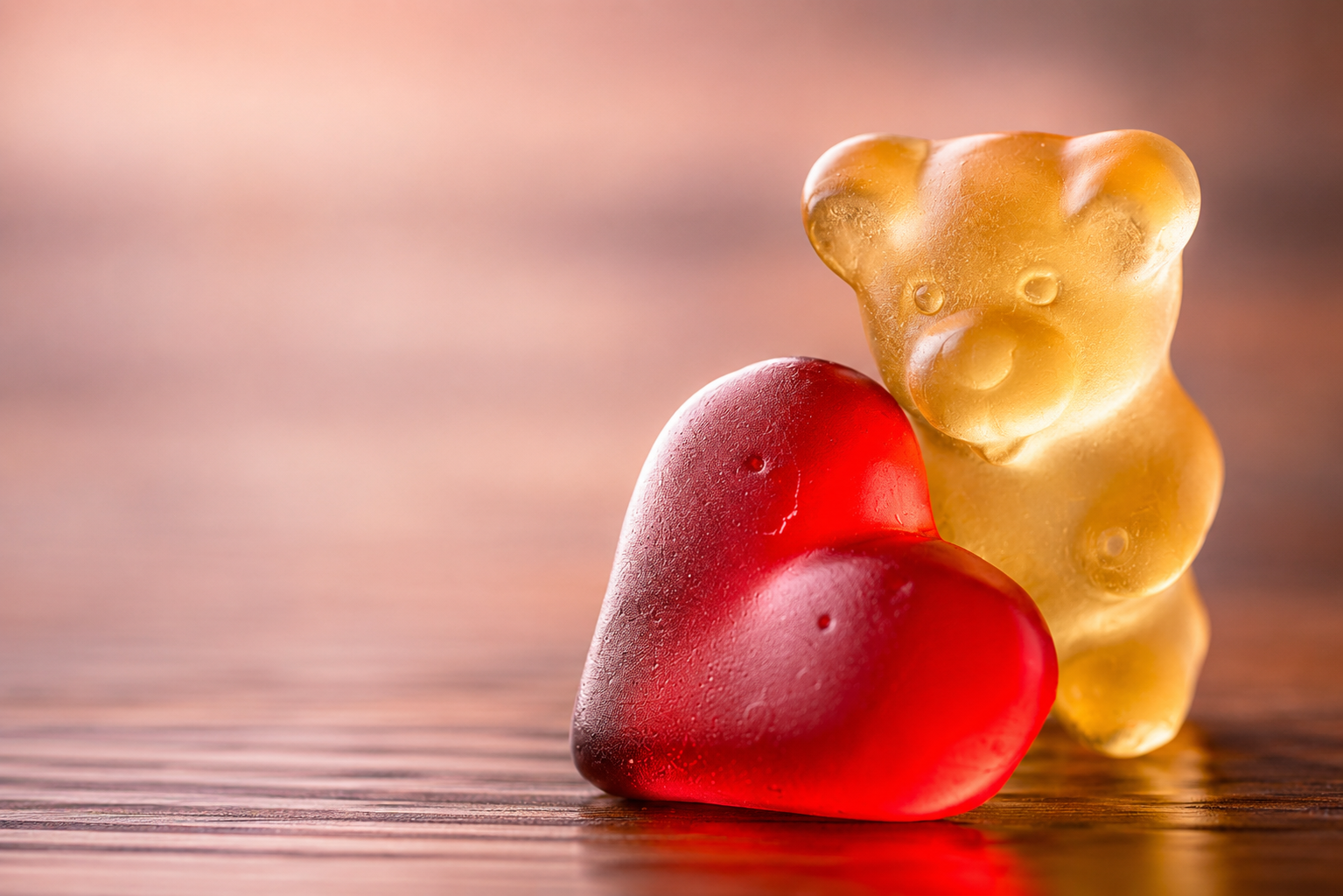
In the rapidly evolving dietary supplement landscape, global procurement teams are shifting away from traditional animal-gelatin matrices toward pectin gummy contract manufacturing. Driven by consumer demand for plant-based, vegan, Kosher, and Halal-compliant dosage forms, pectin (a structural heteropolysaccharide derived from fruit peels) has emerged as the gold standard for functional gummy delivery systems.
However, formulating with pectin presents unique chemical challenges. Unlike gelatin, which sets upon cooling through thermoreversible hydrogen bonding, pectin gelation is governed by a precise interplay of Degree of Esterification (DE), soluble solids (°Brix), pH titration, and divalent cation concentration (such as Calcium $Ca^{2+}$). Failing to balance these parameters results in syneresis (sweating), active constituent degradation, or sticky gummies that clumping during shipping.
Pectin vs. Animal Gelatin: Structural & Manufacturing Comparison
To help supply chain managers and brand directors evaluate manufacturing specifications, the technical matrix below outlines the key physical and operational differences between pectin and gelatin gummy production:
| Parameter / Characteristic | Pectin Matrix (High Methoxyl / Low Methoxyl) | Gelatin Matrix (Bovine / Porcine) | PAG Pharmatech CDMO Advantage |
|---|---|---|---|
| Primary Origin | Plant-based (Citrus peels, apple pomace) | Animal connective tissue (Bovine/Porcine) | 100% Vegan, Clean-Label & Non-GMO |
| Thermal Melting Stability | High stability (Resists melting up to 60°C / 140°F) | Low thermal resistance (Melts at 35°C–38°C) | Zero melting issues in warm-weather fulfillment |
| Gelation Mechanism | pH dependent (3.2–3.5) & Brix dependent (>62%) | Thermoreversible cooling network | Precision automated micro-acidulant dosing |
| Chew & Texture Profile | Clean, tender break with rapid flavor release | Elastic, rubbery, chewy lingering matrix | Customizable firmness & elasticity profiles |
| Religious Compliance | Inherently Halal & Kosher without animal audit | Requires expensive, strict animal lineage certification | Certified Halal & Kosher handling options |
| Sugar-Free Compatibility | Excellent with Maltitol, Erythritol & Allulose | Moderate; sensitive to polyol hygroscopicity | Stable Aw (<0.62) keto formulation engineering |
Procurement Note on Active Loading & Overages
Because pectin requires cooking temperatures between 100°C and 108°C to achieve full starch-gel slurry hydration, heat-sensitive vitamins (such as Vitamin C, B-Complex, Methylcobalamin) and delicate botanical extracts must be added at a validated late-stage thermal window. PAG Pharmatech employs high-precision inline injection systems that minimize thermal exposure to under 45 seconds before starchless or starch-mogul depositing, reducing necessary manufacturing active overages from industry-standard 25% down to 8–12%.
High-Gain Product Recommendations & Turnkey Formulations
As a leading CDMO operating an FDA-registered manufacturing plant in Springville, Utah, PAG Pharmatech provides custom formulation and turnkey private label options across the most sought-after market categories: