Executive Summary: The Evolution of Global CDMO Sourcing
In the contemporary high-precision biomedical, In Vitro Diagnostics (IVD), microfluidic device, and regulated dietary supplement sectors, contract manufacturing has evolved far beyond transactional OEM (Original Equipment Manufacturing) and ODM (Original Design Manufacturing). Global brand leaders and enterprise procurement teams are increasingly shifting toward integrated CDMO (Contract Development and Manufacturing Organization) architectures. This paradigm shift bridges the gap between fundamental research, fast-track prototyping, regulatory submission, complex materials processing, and compliant high-volume commercial production.
As global supply chains face scrutiny over regulatory alignment, tariff exposures, material traceability, and time-to-market speed, operating with a single-tier contract manufacturer introduces operational vulnerability. Enterprise buyers require manufacturing exporters capable of delivering dual-region mitigation, ISO 13485:2016 precision engineering, 21 CFR Part 111 & Part 117 FDA compliance, SQF Edition 9 certifications, and fully validated technology transfer protocols.
Key Strategic Insight: Modern CDMO procurement is no longer driven solely by unit cost. The dominant metrics determining contract success in 2026 and beyond are Information Gain in formula/part engineering, regulatory risk insulation, cleanroom manufacturing integrity, and rapid scaling capabilities within a compressed 90-day execution framework.
90 Days
Concept to Market-Ready Batch
98.4%
On-Time Batch Release Rate
3 Continents
USA · EU · Asia Manufacturing Footprint
ISO 13485
cGMP & FDA 21 CFR 111/117 Compliant
Global Procurement Trends in OEM/ODM & CDMO Manufacturing
Analyzing macro-sourcing shifts across North America, Europe, and the Asia-Pacific region reveals five crucial procurement trends shaping how OEMs select their CDMO factory and exporter partners:
1. Regulatory Harmonization & Dual Validation
Procurement directors demand CDMO partners holding dual certifications across medical device standards (ISO 13485, CE-IVDR) and wellness/nutraceutical cGMP (21 CFR Part 111/117, SQF Edition 9). Single-market compliance is no longer sufficient for multi-market product launches.
2. Demand for Rapid Micro-Prototyping
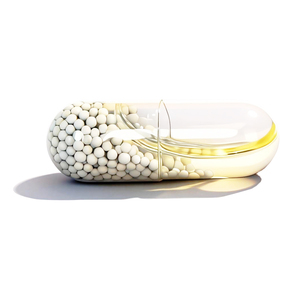
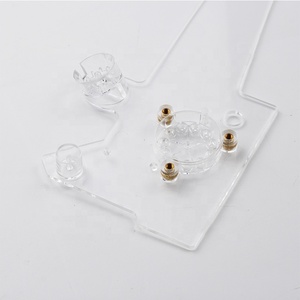
Whether molding complex ABS fluidic manifolds or formulating multi-phase beadlet-in-liquid capsules, brands require early-stage tooling and analytical pilot batches in under 3 weeks to validate bio-compatibility, flow dynamics, and shelf stability before full-scale tooling investment.
3. Advanced Material Specialization
The market is rapidly replacing legacy polymers and generic gelatins. Sourcing teams prioritize factories experienced with Cyclic Olefin Polymers (COP), PMMA micro-channels, Liquid Silicone Rubber (LSR) insert molding, HPMC non-bovine vegetable capsules, and solvent-free diffusion bonding.
Furthermore, supply chain resilience strategies have driven the adoption of "Hybrid Nearshoring". Companies maintain core R&D and pilot batch control within US-based FDA-registered plants (such as Springville, Utah), while leveraging group-owned high-volume manufacturing hubs in Shenzhen and EU-GMP facilities in the Netherlands to optimize global landed costs and eliminate tariff bottlenecks.
Technology Development & Engineering Innovations in CDMO
The intersection of precision mechanical engineering, microfluidics, electronic automation, and advanced pharmaceutical delivery has established a new benchmark for CDMO technical excellence. Below is a comprehensive breakdown of the core manufacturing technologies driving product differentiation:
| Technology Domain |
Engineering Mechanism |
Primary Application |
CDMO Quality Benchmark |
| COP / PMMA Microfluidics |
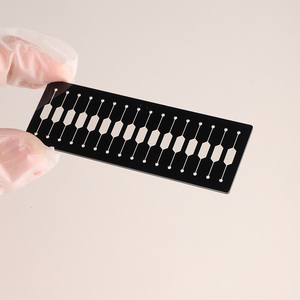
Sub-micron laser etching, diffusion bonding, ultra-precision CNC micro-machining |
IVD Lab-on-a-Chip, Point-of-Care Cartridges, Micro-dosing Drug Delivery |
Optical clarity >92%, zero solvent contamination, channel width tolerance ±2μm |
| LSR Insert Molding |
Liquid Silicone Rubber cold runner injection over-molding with surgical grade metals/resins |
Surgical Consumables, Sealing Gaskets, Respiratory Valves, Implantation Components |
Class 7 Cleanroom molding, ISO 10993 Biocompatibility, flash-free automated production |
| ABS & Glass Manifolds |
High-precision multi-layer CNC drilling, polished optical internal fluid channels |
Automated Diagnostic Analyzers, Industrial Chemical Supply Units (CDS) |
Burst pressure validated >15 bar, zero dead-volume fluidic flow pathways |
| Beadlet-in-Liquid Encapsulation |
Micro-encapsulated active ingredient beadlets suspended in hydrophobic oil matrices inside HPMC shells |
Dual-release nutraceuticals, sensitive vitamin complexes, targeted gut-release formulas |
Zero leak rate, active ingredient barrier protection, dissolution profile control |
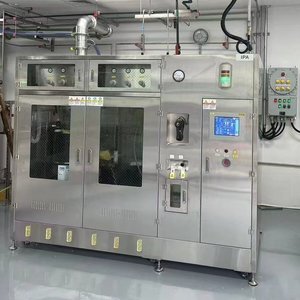
| Automatic Chemical Delivery (CDS/CDM) |
Closed-loop pneumatic chemical dosing, dynamic waste collection, real-time purity sensing |
Semiconductor chemical supply, industrial bio-reactors, cleanroom fluid delivery |
316L electropolished tubing, automated leak detection, PLC digital integration |
1. Microfluidic Laser Etching & Solvent-Free Diffusion Bonding
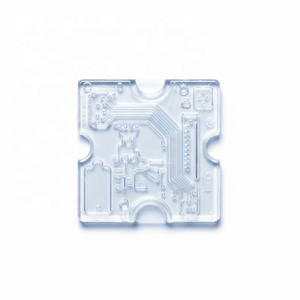
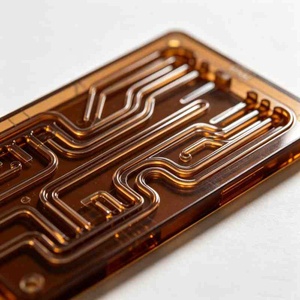
Traditional solvent bonding of microfluidic chips risks clogging sub-micron micro-channels and altering surface hydrophobicity. Advanced CDMO facilities utilize thermal diffusion bonding under controlled vacuum atmospheres. By heating Cyclic Olefin Polymers (COP) or PMMA to precise glass transition temperatures (±0.5°C) while applying uniform hydraulic compression, molecular chains entangle across interface boundaries without liquid adhesives. This yields microfluidic diagnostic chips capable of high-throughput PCR and immunoassay analysis with zero fluorescence background interference.
2. Liquid Silicone Rubber (LSR) Multi-Shot Insert Molding
In medical device assemblies requiring biocompatible elastomeric sealing combined with rigid structural frameworks, Liquid Silicone Rubber (LSR) multi-shot molding represents the state of the art. Automated robotic end-effectors transfer pre-machined metal inserts or PEEK components into Class 7 cleanroom injection presses. The low viscosity of liquid silicone allows filling of thin-walled geometries without thermal degradation of internal sensor elements. The result is surgical-grade components with permanent vulcanized bonds, eliminating mechanical assembly failure points.
3. Advanced Nutraceutical Delivery: Beadlet-in-Liquid Technology
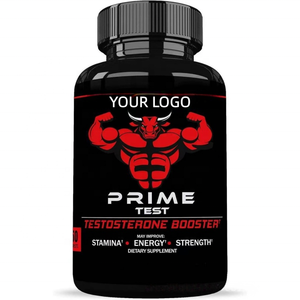
In dietary supplement contract manufacturing, traditional compressed tablets often suffer from poor bioavailability and active ingredient degradation due to compaction heat. Modern CDMO processes employ micro-encapsulated beadlet technology. Active botanical extracts, vitamins, or mineral complexes are fluid-bed coated with enteric polymers into precise 0.5mm–1.5mm beadlets. These are suspended in liquid carriers (such as Omega-3 fish oil, CLA, or MCT) inside non-animal HPMC vegetable capsules. This dual-phase delivery system protects sensitive actives from stomach acid while visually demonstrating premium quality to end consumers.
Enterprise Advantage: Integrated Global CDMO Network
PAG Pharmatech America LLC operates as a tier-one contract development and manufacturing partner, engineered to resolve complex sourcing challenges for global brands, medical device innovators, DTC market leaders, and international distributors.
USA Base: Springville, Utah Plant
Our primary North American manufacturing engine. FDA-registered under 21 CFR Part 111 (dietary supplement cGMP) and 21 CFR Part 117 (preventive controls for human food). Houses 6 dosage form platforms and cleanroom device prototypingsuites.
European Hub: Netherlands EU-GMP
Fully certified EU facility delivering Novel Food and EFSA-aligned regulatory documentation. Enables rapid distribution into European Union member states with complete regional compliance and zero cross-border clearance delays.
Asian Center: Shenzhen Production Hub
High-volume manufacturing, automated tooling fabrication, raw material sourcing leverage, and rapid mold prototyping backed by over 30 years of global precision manufacturing heritage.
Quality Assurance & Regulatory Audit Preparedness
Every commercial production run released across our global network undergoes rigorous Quality Control (QC) and Quality Assurance (QA) governance. We supply complete Batch Production Records (BPR), Certificate of Analysis (CoA) verified by ISO/IEC 17025 accredited laboratories, stability testing data (real-time and accelerated under ICH guidelines), allergen control declarations, and full lot traceability from raw material receipt to finished pallet dispatch.
Technical & Procurement FAQ (Frequently Asked Questions)
Direct answers to essential technical, compliance, and commercial questions asked by procurement officers and engineering teams during vendor qualification:
Q1: What are the typical Minimum Order Quantities (MOQ) across your CDMO manufacturing lines?
Our production MOQs are structured to accommodate both emerging brand validation and enterprise-scale rollouts. For medical consumables, microfluidic cartridges, and IVD manifolds, custom prototyping runs start at 500–1,000 units, while high-volume injection molding runs typically begin at 10,000 units. For dietary supplements, our baseline MOQs are 6,000 bottles for gummies, 5,000 bottles for compressed tablets, softgels, and HPMC hard capsules, and 300 kg for custom powders or stick pack filling. Pet nutrition soft chews start at 2,000 units or 300 kg bulk.
Q2: What is the timeline for custom mold creation, formula R&D, and commercial delivery?
A standard private label program using existing validated base tooling or master formulas typically ships within 8 to 10 weeks. Fully custom programs — including 3D microfluidic mold design, CNC prototype machining, custom tool steel fabrication, active ingredient stability testing, and initial commercial batch release — operate on a strict 12 to 16 week timeline. This disciplined schedule enables us to reliably deliver market-ready finished products within 90 days from design freeze.
Q3: Which international regulatory compliance standards and facility certifications apply?
All manufacturing takes place inside facilities registered with the US FDA and audited under 21 CFR Part 111 (Dietary Supplements cGMP), 21 CFR Part 117 (Preventive Controls for Human Food), and ISO 13485:2016 (Medical Devices Quality Management Systems). Additional third-party certifications include SQF Edition 9 (Global Food Safety Initiative standard), Halal Certification, Kosher Certification, and USDA Organic handling. Certificate documentation packages are provided under NDA during vendor qualification audits.
Q4: Can PAG execute tech transfer of an existing validated product or formula?
Yes. Tech transfer is a core competency of our CDMO engineering team. We regularly onboard existing client toolsets, mold inserts, and validated pharmaceutical/nutraceutical formulations. Our process includes comprehensive Bill of Materials (BOM) auditing, equivalent raw material qualification, pilot comparability batches, and process parameters optimization under our Validation Master Plan (VMP) to guarantee absolute batch-to-batch consistency without interrupting your market supply chain.
Q5: How does your quality system prevent channel blockage in laser-etched microfluidic devices?
Channel integrity in microfluidic chips (COP, PMMA, Glass) is protected through Class 7 HEPA-filtered cleanroom manufacturing, automated optical inspection (AOI), and adhesive-free laser or diffusion bonding. By eliminating liquid glues and maintaining high-precision laser ablation control (±2μm), micro-channel geometry remains pristine, eliminating particulate contamination, channel distortion, or flow resistance variations.
Q6: What batch release documentation is provided for retail and marketplace compliance?
Every commercial production batch is accompanied by a full release package: Certificate of Analysis (CoA) detailing identity, strength, heavy metals, microbial screening, and physical parameters; master batch production records; component certification; allergen statements; stability protocols; and retained sample logging. This documentation satisfies Amazon seller compliance verification, Big-Box retailer vendor onboarding, and international customs entry audits.
Partner with a Global OEM/ODM CDMO Leader
Accelerate your product pipeline with validated US manufacturing, European compliance support, and Asian high-volume scaling. Request technical specifications, sample kits, and product catalogs today.
Get Catalog
 Supplement