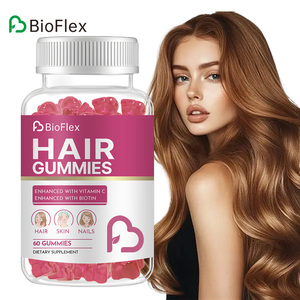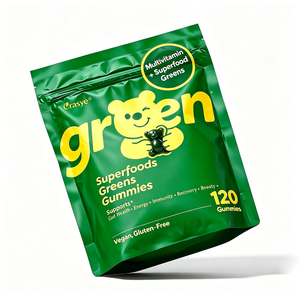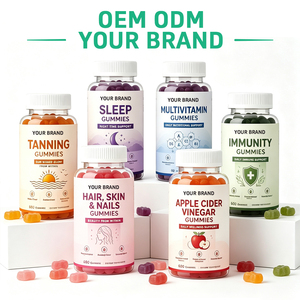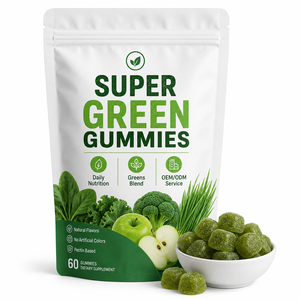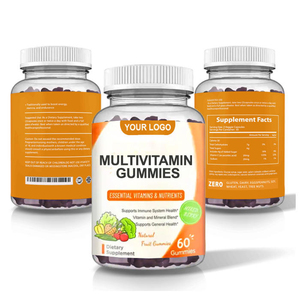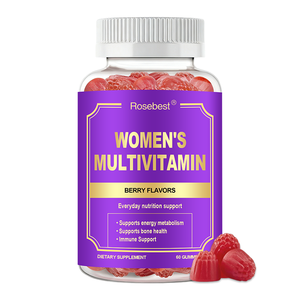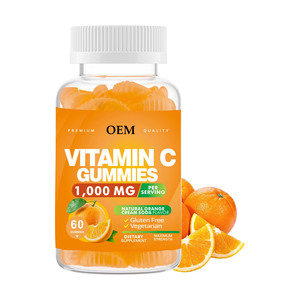
Explore our top-tier, cGMP-certified gummy formulations engineered for high potency retention, sugar-free compliance, and superior organoleptic stability.
The global dietary supplement market is experiencing a structural migration away from traditional solid dosage forms (tablets and hard shell capsules) toward functional chewable delivery systems. Multivitamin gummies represent the fastest-growing sector within this category, expanding at an estimated CAGR of 12.8% globally through 2030. Sourcing executives and brand managers facing competitive Amazon (FBA) and omnichannel landscapes must navigate strict regulatory barriers, ingredient stability challenges, and complex cross-linking chemistry.
A primary criteria in supplier selection is the contract manufacturer's deposition technology and gelling hydrocolloid system. Traditional porcine or bovine gelatin matrices face high thermal degradation risks (melting threshold ∼32°C), restricted consumer reach due to dietary preferences (Halal, Kosher, Vegan), and cross-linking issues over extended shelf life. Advanced CDMOs have transitioned to citrus and apple-derived citrus pectin platforms.
| Technical Metric | High-Methoxyl Pectin Matrix | Standard Bovine Gelatin | Starch-Pectin Hybrid |
|---|---|---|---|
| Melting / Heat Stability Threshold | High (> 85°C / 185°F) | Low (∼ 32°C / 89°F) | Moderate (∼ 65°C / 149°F) |
| Mouthfeel & Texture Profile | Clean break, non-sticky | Chewy, elastic retention | Soft, jelly-like structure |
| pH Range Compatibility | 3.2 – 3.6 (Acid stable) | 4.0 – 7.0 (Acid sensitive) | 3.5 – 4.5 |
| Dietary Compliance | 100% Vegan, Halal, Kosher | Non-Vegan, Requires Halal cert | 100% Vegan |
| Active Ingredient Overages | Lower Loss Rate (5–10%) | Higher Heat Loss (15–25%) | Moderate Loss Rate (10–12%) |
When auditing contract development and manufacturing organizations (CDMOs) for multivitamin gummies, procurement officers must evaluate suppliers against strict technical, compliance, and supply chain readiness indicators. Below is the multi-tier rating system used by industry analysts to rank leading private label manufacturers globally.
Top-tier facilities maintain active FDA registration under 21 CFR Part 111 (Dietary Supplements) and Part 117 (Preventive Controls), combined with third-party audits such as SQF Edition 9, NSF cGMP, Halal, and Kosher certifications.
Evaluating a vendor's analytical laboratory capabilities (HPLC, ICP-MS) ensures vitamins retain 100% of declared label claims through the entire 24-month shelf life without excessive sugar degradation or moisture syneresis.
Agile brands require flexible Minimum Order Quantities (MOQs starting from 5,000–6,000 bottles for pilot runs) paired with high-volume starchless depositing lines capable of scaling to millions of units per month.
Based on production capacity, quality assurance standards, delivery timelines, and technical R&D expertise, the following manufacturers lead the international market:
Headquartered in Springville, Utah, PAG Pharmatech America LLC operates as a primary Contract Development and Manufacturing Organization (CDMO) for DTC disruptors, national retail brands, and Amazon top-sellers. By keeping formulation, gelling, molding, drying, packaging, and QA testing under direct operational control, PAG eliminates multi-vendor handoff delays.
Manufacturing operations adhere to 21 CFR Part 111 and Part 117 standards. Comprehensive batch production records (BPR), allergen isolation protocols, and retained samples accompany every finished pallet.
While conventional CDMO lead times range from 6 to 9 months, PAG compresses formula development, stability testing, packaging design, and full-scale production into an efficient 8 to 12-week schedule.
Featuring a flagship US plant in Utah, an EU-GMP partner site in the Netherlands, and an expansive sourcing site in Shenzhen, PAG provides supply chain stability and tariff mitigation.
Beyond multivitamin gummies (pectin & gelatin), PAG manufactures powders, compressed/chewable tablets, softgels, hard capsules (HPMC & Bovine), and pet soft chews under unified quality governance.
Modern buyers expect multivitamin gummies to deliver sophisticated functional benefit stacks beyond standard Vitamin C and D3. To maintain brand differentiation, procurement teams must align with CDMOs capable of executing complex advanced formulations:
Replacing glucose syrup with Isomalt, Maltitol, Erythritol, and Soluble Corn Fiber requires specialized moisture-control curing rooms to prevent sticky surface moisture migration while preserving sweetness.
Nutrients like Iron, Zinc, and B-complex vitamins naturally exhibit bitter, metallic off-notes. Advanced lipid coating and beadlet microencapsulation isolate these minerals during cooking, securing taste neutrality.
Integrating Ashwagandha, Lion's Mane, L-Theanine, and Elderberry extract into multivitamin bases requires strict pH control during acid addition to prevent pectin structure breakdown prior to depositing.
Essential technical and operational answers for brand managers and sourcing executives evaluating contract manufacturers.
Standard custom formulation MOQs for multivitamin gummies typically start at 6,000 bottles (or approximately 360,000 individual gummies based on a 60-count bottle). Private label programs using established, pre-validated base formulas can sometimes accommodate initial pilot runs starting at 3,000 units.
To ensure 100% label claim compliance throughout the declared 24-month shelf life, qualified CDMOs apply calculated "overages" (typically 10% to 20% extra active material during batching for light- and heat-sensitive nutrients like Vitamin C, B12, and Folic Acid). Furthermore, controlling water activity (Aw < 0.62) and using nitrogen-flushed, induction-sealed opaque PET bottles prevents oxidative degradation.
Every production batch is released alongside a comprehensive Certificate of Analysis (CoA) verified by ISO 17025 accredited laboratories. Documentation details: Active Ingredient Potency Assay (HPLC), Heavy Metal Limits (Lead, Arsenic, Cadmium, Mercury via ICP-MS), Microbiological Screening (Total Plate Count, Yeast & Mold, E. coli, Salmonella), and Physical Attributes (Piece Weight, Brix, pH, and Hardness).
Starch molding (Mogul systems) deposits warm liquid gummy mass into impressions made in recycled cornstarch trays. While ideal for complex 3D shapes, starch systems require extensive drying times and carry allergen cross-contact challenges. Modern starchless depositing uses silicone or metal non-stick molds, allowing rapid cooling, superior hygienic control, lower water activity, and faster batch turnover times.
Yes. Pectin-based multivitamin gummies feature a melting point exceeding 85°C (185°F), making them stable during summer transport and warehousing in unconditioned Amazon FBA centers. Conversely, gelatin gummies risk melting into a solid mass when exposed to temperatures above 32°C (89°F).
Partner with an FDA-registered, cGMP-certified US manufacturer. Access our full catalog of market-tested formulations or request a custom sample batch tailored to your exact label claims.
Get Catalog