Global Technical Procurement Whitepaper: Authoritative Sourcing Analysis, NSF/ANSI Standards Compliance, Fluid Handling Innovations, and Direct Factory OEM Capabilities.
Verified OEM/ODM Catalog
Featured NSF Certified Product Portfolio
Precision-engineered filtration elements, sanitary plumbing fixtures, malleable iron fittings, and specialized hardware manufactured under strict ISO 9001 and NSF/ANSI audit frameworks.
NSF / ISO9001
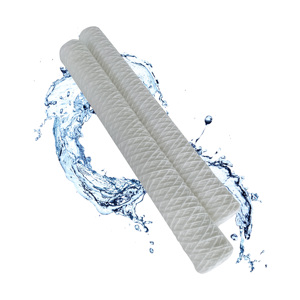
High Quality 10-20 Inch NSF ISO9001 Certified Water Filter Cartridge 5 Micron PP String Wound Element 250 LPH Industrial
5 Micron Rating250 LPH FlowPP Fiber
Engineered with high-void continuous polypropylene yarn, delivering gradient depth filtration for industrial fluid treatment and pre-RO purification.
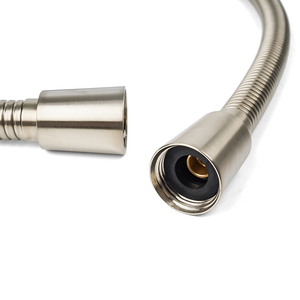
Features high-tensile 304 stainless steel interlocking construction with NSF-certified non-toxic EPDM inner core for hot/cold sanitary water compliance.
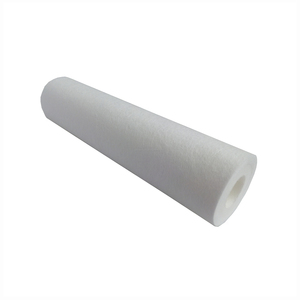
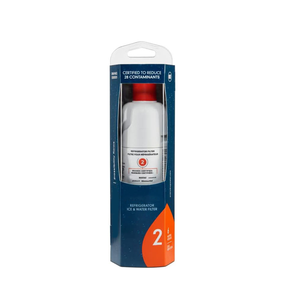
NSF Certified PP Filter Cartridge Machine Wholesale Ro System Water Cartridges Home Use Manufacturing Plant Hotels Retail
Thermally Bound100% Pure PPZero Surfactants
Melt-blown poly-matrix cartridge producing zero chemical leachables. Widely deployed across commercial RO systems, hotel water treatment, and food plants.
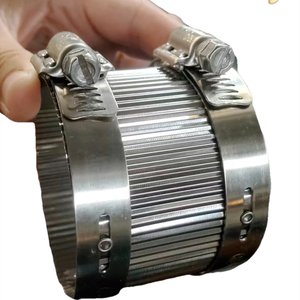
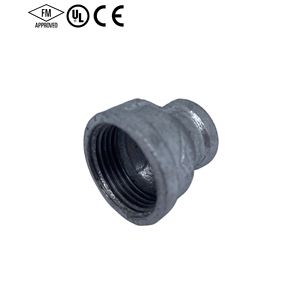
Professional Grade EN10242 NSF Galvanized Malleable Iron Pipe Fittings Tee Elbow Cross Cap Union Socket 4in for Water Gas Oil
Hot-Dip Galv.EN10242 Class AHigh Pressure
Precision threaded malleable cast iron fittings engineered for extreme pressure containment in municipal water systems, gas transmission, and oil lines.
Executive Summary: The Strategic Value of NSF Certification in Global Procurement
In international fluid handling, potable water infrastructure, commercial plumbing, and sanitary hardware procurement, compliance with NSF International standards represents the absolute benchmark of product integrity and legal market accessibility. Global buyers—ranging from municipal water authorities and commercial building developers to private-label appliance manufacturers—face increasingly stringent toxicological standards, such as the US Safe Drinking Water Act (SDWA), European REACH/RoHS regulations, and updated GB standards in China.
Sourcing from top China NSF-certified suppliers provides international enterprises with a distinct competitive advantage: the seamless synthesis of cost-effective high-volume manufacturing and world-class regulatory compliance. Leading Chinese OEM/ODM exporters have upgraded their metallurgical foundry operations, automated extrusion suites, and cleanroom assembly lines to conform directly with NSF/ANSI Standard 61 (Drinking Water System Components – Health Effects) and NSF/ANSI Standard 372 (Lead Content Reduction).
Toxicological Safety
Every product component undergoing contact with potable water is rigorously screened for trace extractable contaminants, heavy metal extraction (lead, cadmium, arsenic), and organic leachables under static and dynamic exposure conditions.
Structural Integrity
Components undergo extended hydrostatic burst testing, cyclic pressure shock tests (0 to 150 PSI over 100,000 cycles), and mechanical load stress verification to prevent catastrophic field failures.
Unrivaled Cost Efficiency
Direct export sourcing from integrated Chinese manufacturing hubs eliminates middleman markups, yielding 25% to 42% unit cost reductions while preserving strict NSF certification traceabilities.
Regulatory Note: Distinguishing NSF Listed vs. Self-Declared Compliance
True NSF certification requires official inclusion in the public NSF Official Listing Directory. Premier Chinese exporters maintain facility-level annual unannounced audits, raw material supplier verification, and ongoing product re-testing to guarantee that certified SKUs meet identical safety thresholds from batch 1 to batch 100,000.
When specifying fluid components, industrial valves, pipe fittings, or filtration systems, procurement teams must align engineering specifications with exact NSF regulatory classifications. The comparison matrix below outlines core standards applied in top Chinese export manufacturing facilities:
NSF Standard
Primary Scope & Target Products
Key Testing Parameters
Acceptance Criteria / Threshold
NSF/ANSI 61
Potable Water Components (Pipe Fittings, Valves, Hoses, Cartridges)
Chemical Extraction, Heavy Metal Leaching (Pb, Cd, Ni), Volatile Organics
QDEV Limits < Safe Drinking Water Act Maximum Allowable Levels
NSF/ANSI 372
Lead Content in Drinking Water System Components
Gravimetric / Spectrographic alloy analysis across all wetted surface areas
Weighted Average Lead Content ≤ 0.25% (Wetted Surface Area)
NSF/ANSI 42
Drinking Water Treatment Units (Aesthetic Effects)
VOC Reduction, Lead Extraction, Cyst/Giardia Capture, Asbestos Screening
≥ 99.95% Cyst Removal; Lead Reduction to below 5 ppb (μg/L)
NSF/ANSI 50
Pool, Spa & Recreational Water Equipment
Corrosion Resistance, Head Loss Curves, UV Degradation, Cyclic Fatigue
Continuous 1,000-Hour Salt Spray Resistance; Zero Stress Cracking
Advanced Manufacturing Infrastructure of Leading Chinese Suppliers
Modern Chinese exporters of NSF-certified products have evolved far beyond basic assembly operations. Premier manufacturing campuses in Zhejiang, Jiangsu, and Guangdong operate state-of-the-art foundry, machining, cleanroom, and testing facilities engineered specifically to meet Western OEM requirements.
1. Metallurgy & Lead-Free Brass Foundry Control
To strictly comply with NSF/ANSI 372, elite foundries utilize induction melting furnaces paired with Direct-Reading Optical Emission Spectrometers (OES). Every heat lot of brass (such as CW511L, C37700, or DZR Eco-Brass) undergoes real-time chemical composition verification prior to hot-forging. This eliminates any possibility of cross-contamination with scrap leaded brass.
2. Melt-Blown Polypropylene & Cleanroom Extrusion
For micro-filtration components—including 5-micron string wound and thermally bonded PP filter elements—production occurs inside ISO Class 8 (Class 100,000) cleanrooms. Advanced multi-zone temperature extruders ensure thermally unified fiber binding without synthetic binders, resins, or wetting agents that could leach unwanted organic compounds into purified water systems.
3. Automated CNC Machining & Hydrostatic Testing
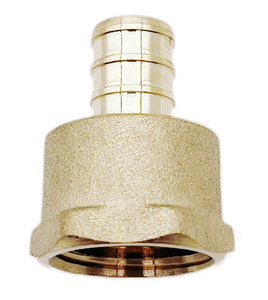
Pipe fittings (such as EN10242 galvanized malleable iron unions and PEX couplings) are machined on multi-axis Japanese CNC transfer lines, holding dimensional tolerances within ±0.01mm. Prior to export packing, 100% of pressurized valve bodies and flexible hoses undergo automated helium leak detection or water-submerged pressure containment testing at 1.5 to 2.0 times rated operating pressure.
Global Sourcing Trends & Future Outlook (2026–2030)
The global fluid component and sanitary hardware procurement landscape is undergoing rapid technological and regulatory transformations. Enterprise buyers must anticipate the following macro trends when establishing vendor relationships with Chinese exporters:
PFAS & Forever Chemical Mitigation
Future NSF 53/58 revisions mandate sub-micron adsorption of Per- and Polyfluoroalkyl Substances (PFAS). Chinese R&D centers are developing advanced coconut-shell activated carbon blocks infused with specialized ion-exchange resins to achieve sub-10 ppt contaminant removal.
Decarbonized Metallurgy & Recyclability
Alloy manufacturers are transitioning to closed-loop recycled copper and low-carbon aluminum die-casting, reducing the embedded carbon footprint of NSF-certified plumbing hardware by up to 35% to satisfy global ESG mandates.
Smart IoT Fluid Monitoring Integration
Next-generation NSF-certified filter housings and valve assemblies are incorporating embedded micro-sensors for real-time pressure drop, flow rate monitoring, and predictive filter life alerts via Bluetooth and LoRaWAN networks.
Frequently Asked Questions (FAQ) for Global Procurement Officers
Key technical, regulatory, and commercial inquiries addressed by our engineering team to streamline direct factory sourcing:
Q1How can an international buyer independently verify a Chinese supplier’s NSF certification credentials?
International buyers should request the supplier's 7-digit NSF Plant Identification Number or official facility listing name. You can directly search the public NSF Official Listing Directory online. Verified suppliers will display exact SKU model numbers, certified plant physical addresses, and the specific standards (e.g., NSF/ANSI 61, 372, 42, 53) under which the products are licensed.
Q2What is the critical technical difference between NSF/ANSI Standard 61 and NSF/ANSI Standard 372?
NSF/ANSI 61 measures chemical leaching into water—ensuring no harmful levels of heavy metals, phthalates, or volatile organic compounds dissolve from components into drinking water. NSF/ANSI 372 measures total lead content within the metallurgy itself, mandating that the weighted average lead content across all wetted surface areas does not exceed 0.25%. Full drinking water compliance in the US and Canada requires certification to both standards.
Q3Can custom private-label branding (OEM) be applied to NSF-certified components without invalidating the certification?
Yes. Certified Chinese suppliers can execute "Another Name For" (ANF) co-listings directly with NSF International. Under an ANF agreement, your custom brand name and private label model numbers are officially linked to the manufacturer’s underlying certified master file, allowing legally compliant custom packaging and branding.
Q4What are typical Minimum Order Quantities (MOQs) and production lead times for OEM NSF products?
Standard OEM production MOQs typically range from 1,000 to 5,000 units for complex fittings/hoses, and 500 to 2,000 units for specialized filtration cartridges. Standard production lead times average 25 to 35 business days from final sample approval, with expedited 14-day production windows available for established recurring contract orders.
Every bulk export container is dispatched with a comprehensive quality dossier, including:
Batch Certificate of Analysis (CoA) and Spectrographic Alloy Test Reports
Official NSF Certification Certificate copies and C-of-C (Certificate of Compliance)
Hydrostatic Pressure & Burst Test Inspection Sheets
ISO 9001 Factory Quality Audit Traceability Logs
Q6How do Chinese factories prevent cross-contamination during lead-free brass production?
Leading factories enforce physical segregation of raw material storage bins, dedicated melting pots for lead-free alloys (such as CW511L/C37700), distinct color-coded tooling, and real-time Spectrometer checks prior to every pour. Machine turnings and scrap are processed in segregated recycling channels to prevent accidental lead contamination.
Partner with Verified China NSF Certified Manufacturers
Accelerate your product launch, reduce unit procurement costs, and guarantee 100% regulatory compliance. Contact our senior technical sourcing engineers today for sample requests, OEM quotes, and NSF documentation packages.
 Supplement