Featured Contract Blending & Custom Production Capabilities
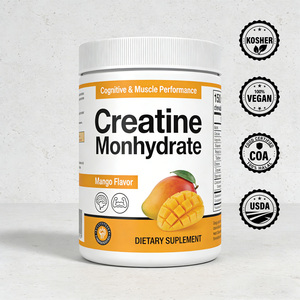
Engineered for precision active distribution, zero cross-contamination, and strict cGMP compliance across botanical powders, thickeners, functional chews, and specialized supplements.
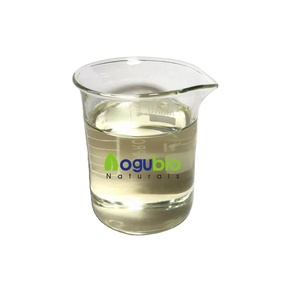
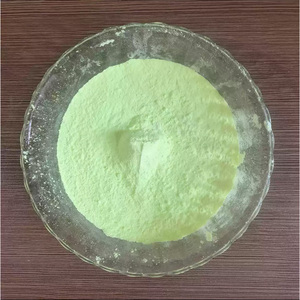
Factory Supply High Quality Crothix Cosmetic Raw Materials Crothix Liquid Thickeners
Advanced liquid viscosity modifiers & high-shear chemical blending formulations for personal care applications.
Why Leading Global Brands Benchmark Our Contract Blending Plant
Operating from state-of-the-art facilities in Springville, Utah, alongside an integrated global footprint across Europe and Asia, we eliminate formulation bottlenecks through validated analytical chemistry and industrial processing robotics.
FDA-Registered & SQF Ed. 9 Certified
Our manufacturing protocols adhere strictly to 21 CFR Part 111 (Dietary Supplement cGMP) and Part 117 (Preventive Controls for Human Food). Every blend undergoes full lot traceability with zero tolerance for unvalidated process variations.
Micro-Scale Homogenization Technology
Utilizing high-shear plow mixers, tumble V-blenders, and fluid bed spray granulation systems, we deliver uniform dispersion of trace active ingredients down to microgram dosages without hot-spotting.
Rapid 90-Day Execution Cadence
From custom active sourcing and pilot batch prototyping to accelerated stability testing and full commercial scale-up, our streamlined engineering workflow guarantees market entry within 90 days.
Integrated Global CDMO Network
With operational bases in Utah (USA), an EU-GMP plant in the Netherlands, and scale manufacturing assets in Shenzhen, we mitigate geopolitical tariff risks and guarantee localized supply chain resilience.
Global Sourcing White Paper: Industrial Contract Blending Trends & Technical Evolution
The global contract blending and custom formulation manufacturing market is undergoing a structural paradigm shift driven by stricter regulatory oversight, demand for clean-label botanical ingredients, and complex multi-active formulation architectures. B2B procurement executives, supply chain directors, and brand owners no longer view contract blending as a simple commodity service; it is now recognized as a critical technology node in brand risk management and product differentiation.
"Information Gain Insight: Modern contract blending demands micro-particle engineering. Achieving a Coefficient of Variation (CV) below 3.0% across active loads under 0.5% weight volume requires precision mass-flow meter calibration, controlled humidity environments, and multi-stage particulate shear mitigation."
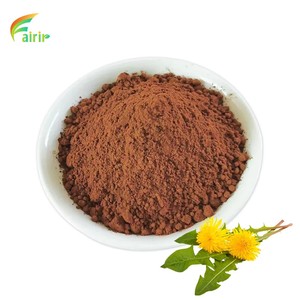
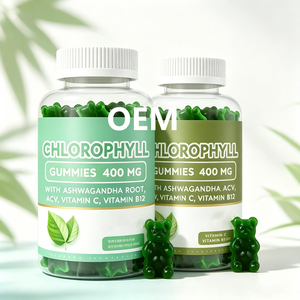
As functional food, nutraceutical, and cosmetic formulation specifications grow increasingly sophisticated, sensitive botanical bioactive compounds (such as dandelion extract ratios, green chlorophyll matrices, and probiotic carriers) demand specialized processing environments. Traditional high-heat blending methods risk thermal oxidation and potency degradation. Leading contract blending suppliers are investing heavily in cold-process ribbon blenders, nitrogen-purged mixing chambers, and micro-encapsulation techniques that shield active molecules from ambient moisture and oxygen during particle collision.
2. Stringent Allergen Segregation & Zero Cross-Contamination
With major commercial platforms (such as Amazon, Walmart Marketplace, and global retail distributors) enforcing strict COA verification policies, blending factories must implement isolation-chamber architectures. Facilities engineered with localized HEPA air filtration zones, dedicated stainless-steel contact piping, and clean-in-place (CIP) automated sanitation loops guarantee that cross-allergens—such as soy, dairy, gluten, and marine derivatives—are completely segregated during multi-product production schedules.
Advanced Contract Blending Engineering & Quality Control Systems
Achieving uniform active distribution throughout a 5,000 kg batch requires an intimate understanding of particle physics, bulk density variations, and powder flow characteristics. When mixing materials with vastly contrasting bulk densities—such as dense mineral salts combined with fluffy botanical extracts—segregation during discharge is a frequent failure point in unvalidated contract facilities.
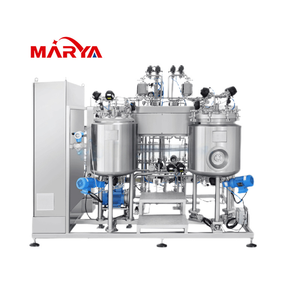
Our Springville, Utah facility utilizes dynamic blending systems specifically matched to raw material physical profiles:
• Double-Cone & Tumble V-Blenders: Optimized for delicate botanical powders, fragile granules, and dry vitamin premixes where particle degradation must be avoided.
• Fluidized Bed Granulators: Designed for custom agglomeration, transforming fine, cohesive powders into free-flowing, dust-free granules ideal for direct tablet compression or stick-pack filling.
"Analytical Rigor: Every commercial batch released from our production floor undergoes High-Performance Liquid Chromatography (HPLC) and Inductively Coupled Plasma Mass Spectrometry (ICP-MS) to audit potency, heavy metal ceilings (<0.1 ppm lead/cadmium), and microbial purity."
Procurement teams are actively replacing synthetic flow agents (such as silicon dioxide and magnesium stearate) with natural organic substitutes like rice hull concentrates and acacia gum. Our R&D formulations lab specializes in optimizing friction angles and powder bulk density without relying on synthetic processing aids, keeping consumer label panels 100% clean and regulatory compliant.
Strategic Procurement Guide: How to Evaluate a Contract Blending Supplier
Selecting the right contract manufacturing partner is a multi-layered decision that impacts unit economics, brand reputation, and regulatory standing. Procurement directors should conduct comprehensive audit evaluations centered on the following key metrics:
1. Analytical Testing Transparency: Ensure your supplier maintains an in-house ISO-accredited quality control lab capable of validating active identity, raw material purity, moisture content (Loss on Drying - LOD), and micro-burden before blending begins.
2. Flexible Minimum Order Quantities (MOQs): High-growth brands require manufacturing flexibility. Partners offering tiered pilot runs (e.g., 300 kg for powder blends or 5,000 units for chews/tablets) allow brands to test market demand before committing capital to massive commercial volume runs.
3. Comprehensive Regulatory Documentation: Demand full batch production records, allergen statements, stability protocol data, Halal/Kosher/USDA Organic certificates, and ready-to-file Supplement Facts formatting aligned with FDA 21 CFR labeling standards.
Technical Sourcing FAQs
Contract Blending & Formulation Procurement FAQ
Direct answers to technical, quality, and supply chain queries raised by enterprise procurement officers.
What is the standard Minimum Order Quantity (MOQ) for custom contract blending?
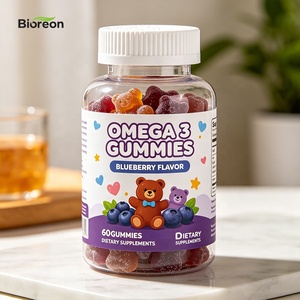
Our batch MOQs start at 300 kg for custom dry powders and liquid thickener formulations, 5,000 units for tablets, softgels, and hard capsules, and 6,000 units for specialized pectin gummies or functional chews. Flexible trial volumes are available during brand R&D scaling phases.
How do you verify batch homogeneity across complex multi-ingredient formulas?
We validate batch uniformity by analyzing sample pulls taken from multiple geometric zones (top, middle, bottom) within the blender. Samples undergo analytical assay testing to guarantee a Coefficient of Variation (CV) under 3.0% before proceeding to primary packaging.
What facility certifications and compliance standard documentation do you provide?
Every production batch is released alongside a comprehensive Certificate of Analysis (COA), full batch manufacturing records (BMR), allergen cross-contact statements, and raw material safety documentation. Facilities operate under FDA 21 CFR Part 111/117, SQF Edition 9, and hold Halal, Kosher, and USDA Organic processing standards.
Can your engineering team transfer and optimize an existing legacy formulation?
Yes. We specialize in seamless technology transfers. Our formulation team audits your existing bill of materials, evaluates particle size profiles, identifies equivalent high-purity active sources, and runs scale-up pilot batches to verify product match without disrupting your market supply chain.
What turn-around lead times can brand procurement expect from project kickoff?
Private label formulas using stock raw materials ship within 8 to 10 weeks. Fully custom formulation projects—inclusive of R&D sample matching, flavor matrix tuning, accelerated stability testing, and packaging line integration—are delivered market-ready inside 90 days.
Accelerate Your Contract Blending & Manufacturing Schedule
Consult with our Utah-based technical engineers today to request a custom formulation quote, request facility audit documentation, or inspect raw material COAs.
 Supplement